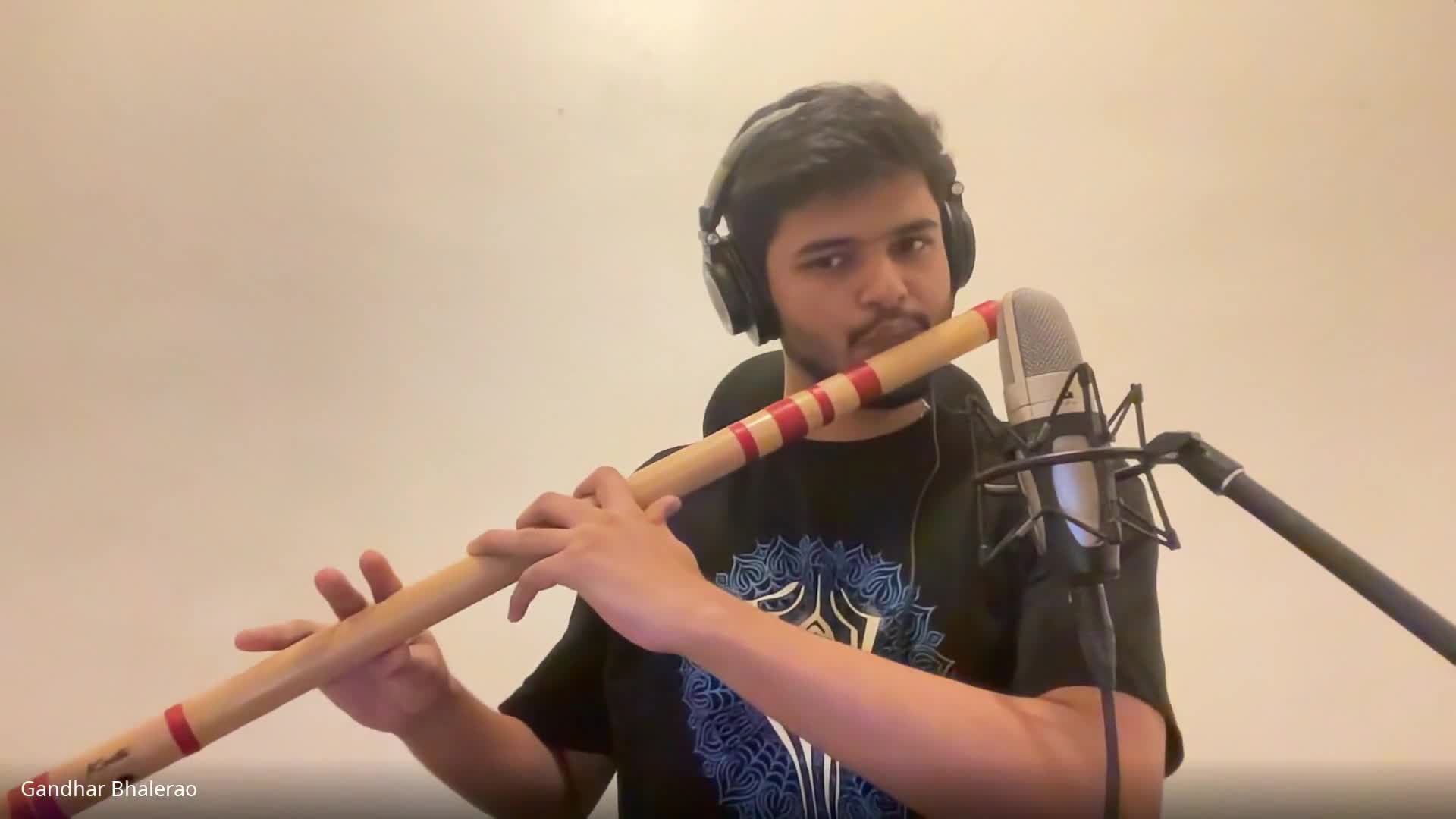
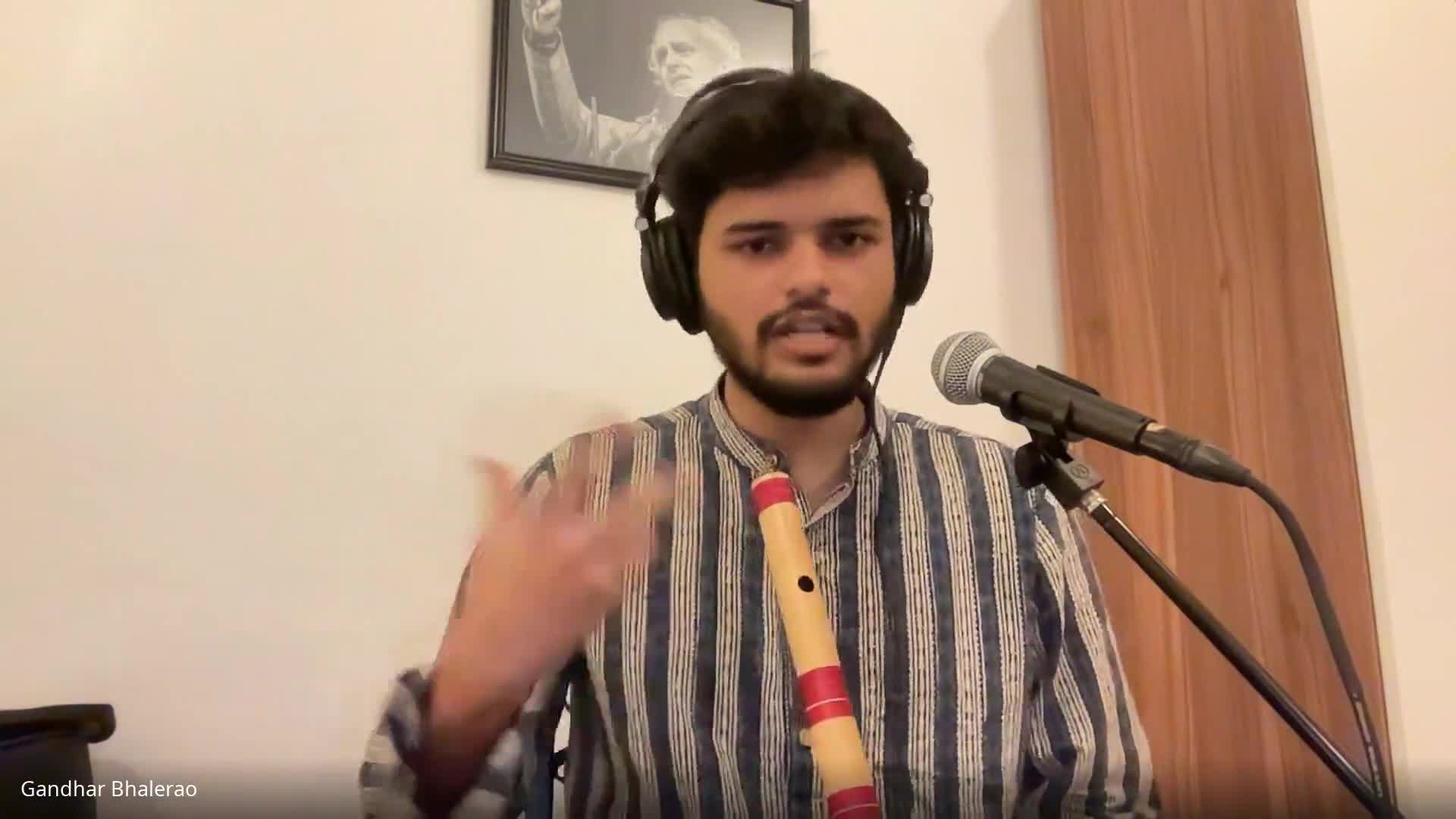
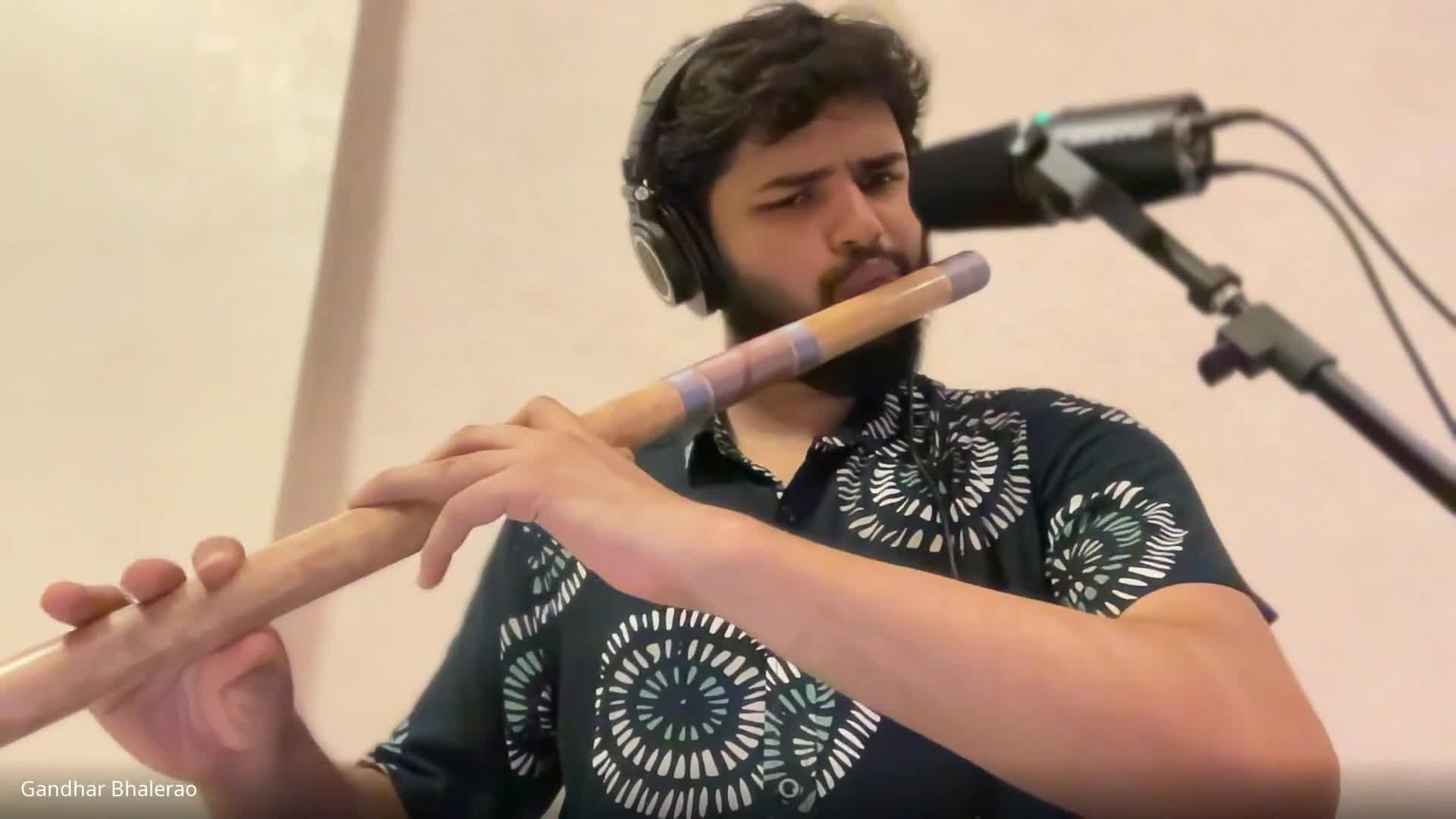
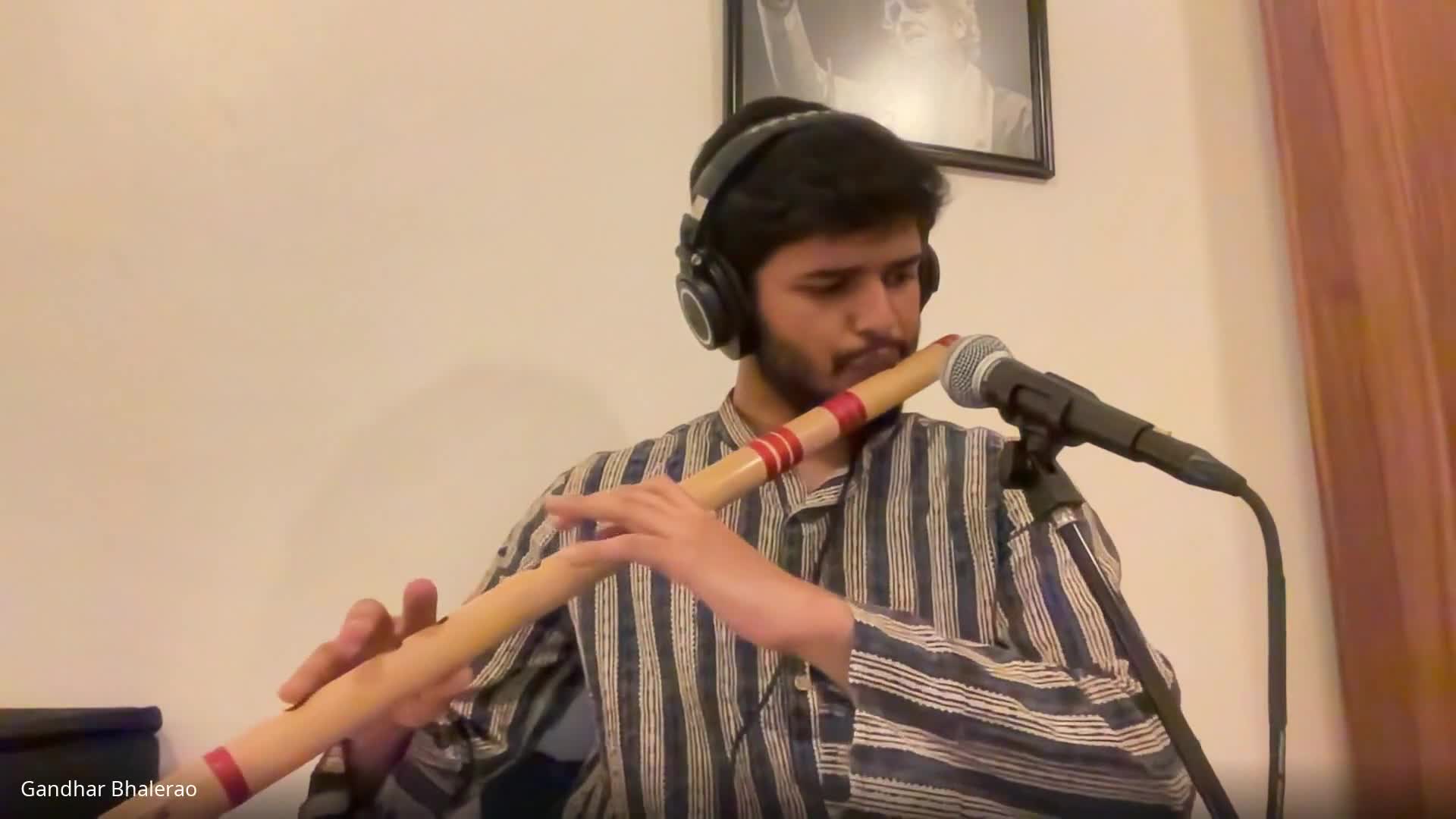
Raag Tilak Kamod
Gandhar's teaching centers on navigating the challenges of a limited phrase set within a raga while maintaining musical interest and structural integrity.
Avoiding Monotony
Since the raga works with a restricted vocabulary of phrases, Gandhar emphasized that musicians must actively vary their speed, volume, and pauses to keep performances engaging. Without this deliberate variation, repeated phrases can quickly become monotonous to the listener.
Anchor Notes: Ga and Ni
Gandhar identified Ga (Gandhar) and Ni (Nishad) as the essential anchor points of the raga. These notes aren't just melodic options—they serve as structural pillars around which phrases are built. Crucially, he noted that phrases involving these anchors are not flexible in execution: they depend on specific rhythmic placement and precise phrasing to preserve the raga's identity. Deviating from the correct rhythm or phrasing when using these notes compromises the integrity of the raga.
Functional Roles of Pa and Ma
Two other notes were given specific functional identities:
Pa (Pancham) functions as a concluding note—it signals resolution and closure within a phrase or passage.
Ma (Madhyam), by contrast, creates tension without resolving it. It acts as a point of unresolved movement, propelling the music forward rather than settling it.
This distinction matters because using Pa and Ma interchangeably or without awareness of their contrasting functions can undermine the musical logic of a phrase.
Understanding Note Character
A broader principle underlying all of this is Gandhar's insistence that musicians must understand the individual role and character of each note in the raga—not just its pitch, but its function (anchor, resolution, tension, etc.). Without this understanding, phrasing can end up sounding "odd" or musically incoherent, even if technically correct.
Advice Specific to Flute Players
Gandhar gave targeted advice to flute players: rather than trying to imitate vocal bandish styles (the melodic-rhythmic composition style typical of vocal music), they should prioritize distinct dynamics. This approach helps ensure that musical phrases reach clear resolution, which may be harder to achieve on the flute if vocal phrasing conventions are copied directly rather than adapted to the instrument's strengths.
The Dual Requirement for Mastery
Finally, Gandhar articulated a core philosophy of proficiency: true mastery requires simultaneous, complete balance between two elements—
100% muscle memory (the physical, technical execution)
Musical awareness (understanding of structure, function, and expression)
Neither alone is sufficient; technical fluency without musical understanding—or vice versa—falls short of genuine proficiency.
Core takeaway: Gandhar's teaching frames raga performance as a discipline requiring both technical precision (correct rhythm, phrasing, and note function) and expressive judgment (dynamic variation, instrument-appropriate style), unified through simultaneous physical and musical mastery.